
I’ve been working with a leader who wants his team to get better at influencing. In particular, influencing upwards, getting more traction with senior stakeholders and speaking up and having more visibility and impact in meetings.
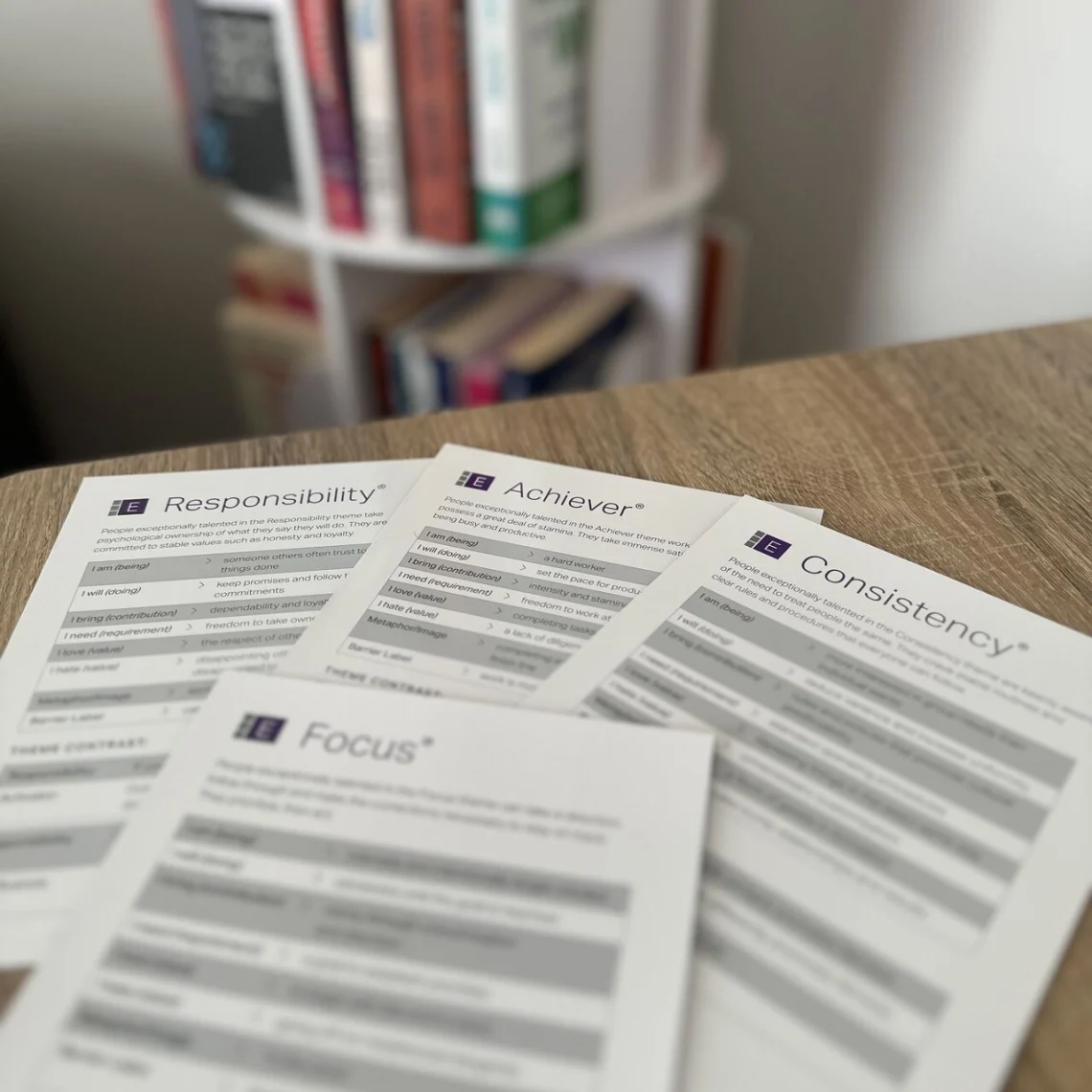
We have been working together using CliftonStrengths – a tool that helps individuals and teams understand their natural patterns of thinking, feeling and behaving. When we looked at the team’s collective strengths, it emerged that they were exceptionally high in the Executing area. So this is a team you can absolutely rely on. They deliver, they follow through, they are consistent and they hold things together.
The CliftonStrengths tool groups its 34 strengths/talents into four domains – Executing, Relationship Building, Strategic Thinking and Influencing. And when we looked across this team’s profile, there were far fewer strengths from the Influencing domain.
So for this team, the central question became:
How do you influence when Influencing isn’t one of your dominant strengths areas?
The answer isn’t to try to become someone else. Instead, we looked at the strengths they already had and how they could use them differently.
For some, their executing strengths gave them enormous credibility. They deliver. They know their stuff. They prepare well. That credibility can give them influence.
For others, influence came through trust and relationships: understanding their stakeholders, building strong one-to-one connections and knowing what matters to the person across the table.
And for others, it was about more readily sharing their thinking, ideas and perspectives rather than keeping those thoughts to themselves.
Having fewer Influencing strengths doesn’t mean you can’t influence. It means you need to think differently about how you influence.
That’s an important part of how I approach team development days.
I want teams to leave understanding what they already have, how those strengths can be used more effectively, and how they can stretch when the situation requires it.
Development doesn’t need to start with what’s missing.
It can start with what’s already present and strong.