
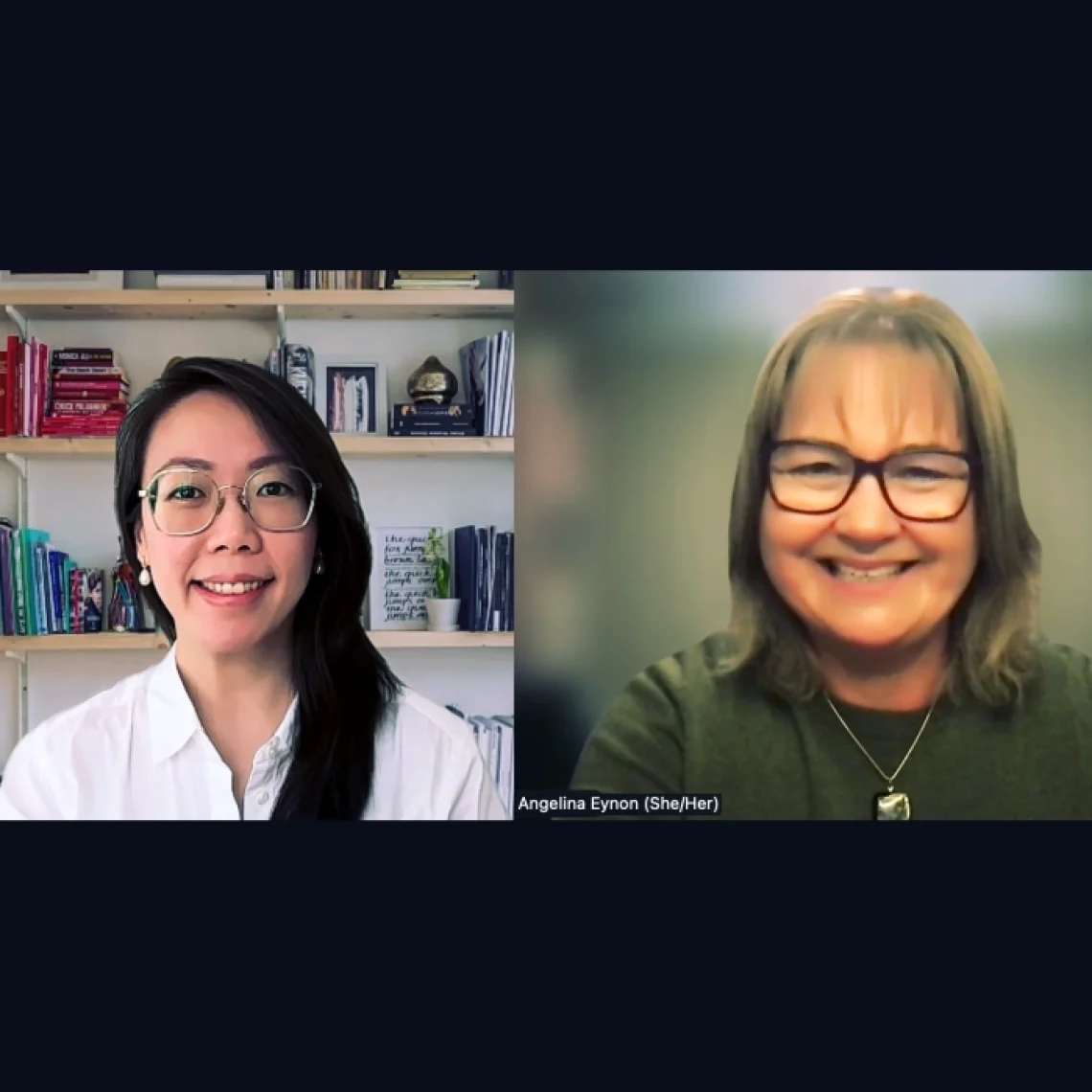
This week I had the pleasure of being interviewed by Dr Zen Goh, Chief Examiner of the Professional Development unit I teach into at Monash University.
Zen is creating a series of interviews for our students and invited me to speak about my twenty-plus-years’ experience of learning about, working with, applying and teaching strengths and strengths-based approaches.
It was such an energising conversation because it took me back to the beginning of my own journey with strengths. I first encountered the VIA Survey of Character Strengths in 2004. At that point in my career, I had spent a lot of time thinking about development as a process of identifying gaps, fixing weaknesses and solving what was wrong – mostly what I thought was wrong with me! Then an executive coach introduced me to the idea that we could also improve from a place of strength: this was a huge turning point for me.
For the first time, development became not just ‘working on what I lacked’, it also became about what was already there. What was the solid foundation I already had: what gave me energy; what came naturally; what helped me contribute at my best.
This was about leveraging and building on, rather than simply correcting. And this approach informed the career direction I took from there: moving into leadership development and coaching and helping others to see and build the best within themselves and their teams.
In our conversation, Zen and I explored why strengths matter, especially for students and emerging professionals who are beginning to think seriously about who they are, how they work and what kind of contribution they want to make.
When we work from our strengths, we access more energy, motivation and ease. Strengths can give us leverage. They can help us learn, build confidence, navigate challenges and recover from setbacks. They can also help us understand ourselves and others with more compassion.
Rather than seeing our patterns only as problems to be managed, strengths-based approaches invite us to ask different questions.
- What is right with me?
- What gives me energy?
- When do I feel most like myself?
- Where do I make my best contribution?
- How might I use more of this, more deliberately?
Of course, this does not mean ignoring weaknesses or pretending that every strength is always helpful. Two of the most important parts of strengths work is nuance and context. Ryan Niemiec from the VIA Institute introduced the idea of “golden mean” or sweet spot of strengths use. In other words, strengths are most helpful when they are used in the right way, at the right time, in the right amount.
A strength can be overused. It can also be underused.
Overuse can look like relying on the same tools all the time, even when the situation calls for something different. For example, a strength like kindness may become over-accommodation. A strength like curiosity may become distraction. A strength like perseverance may become pushing too hard for too long.
Underuse can be just as important to notice. Sometimes we dampen down our strengths to fit in, to avoid standing out, or to adapt to a particular team, organisation or culture. We may hold back our perspective, our creativity, our courage, our humour, our honesty or our care because it does not feel safe or welcome.
That is why strengths work is not simply about identifying our top strengths and celebrating them.
- It is about becoming more discerning.
- It is about noticing, practising, reflecting and adjusting.
It is about asking:
- Where is this strength serving me well?
- Where might I be leaning on it too heavily?
- Where am I holding it back?
- What would optimal use look like here?
For those who are new to strengths-based approaches, this can be a powerful place to begin.
- Start by noticing when you feel energised.
- Notice the tasks, conversations and environments where you feel most engaged.
- Notice what others come to you for.
- Notice what feels natural to you, but valuable to others.
Then reflect on how those strengths might help you shape your learning, your relationships, your career choices and the way you contribute in the world.
Strengths are not fixed labels and they are also not an excuse to avoid growth. They are not a claim that we are only good at some things and therefore should not explore others. They are a starting point for self-awareness, development and more intentional action.
What I love most about strengths-based work is that it gives people a different way to see themselves. Not as a list of deficits or a set of problems to fix. But as people with patterns of energy, capacity, possibility and contribution. That feels especially important for students as they begin to imagine their professional futures.
My hope is that this interview sparks curiosity and that our students begin to explore their own strengths more deeply. That they become interested not only in what they need to improve, but in what they can build on.
Because when we understand our strengths, we do not just become more confident. We become more intentional about how we show up.